

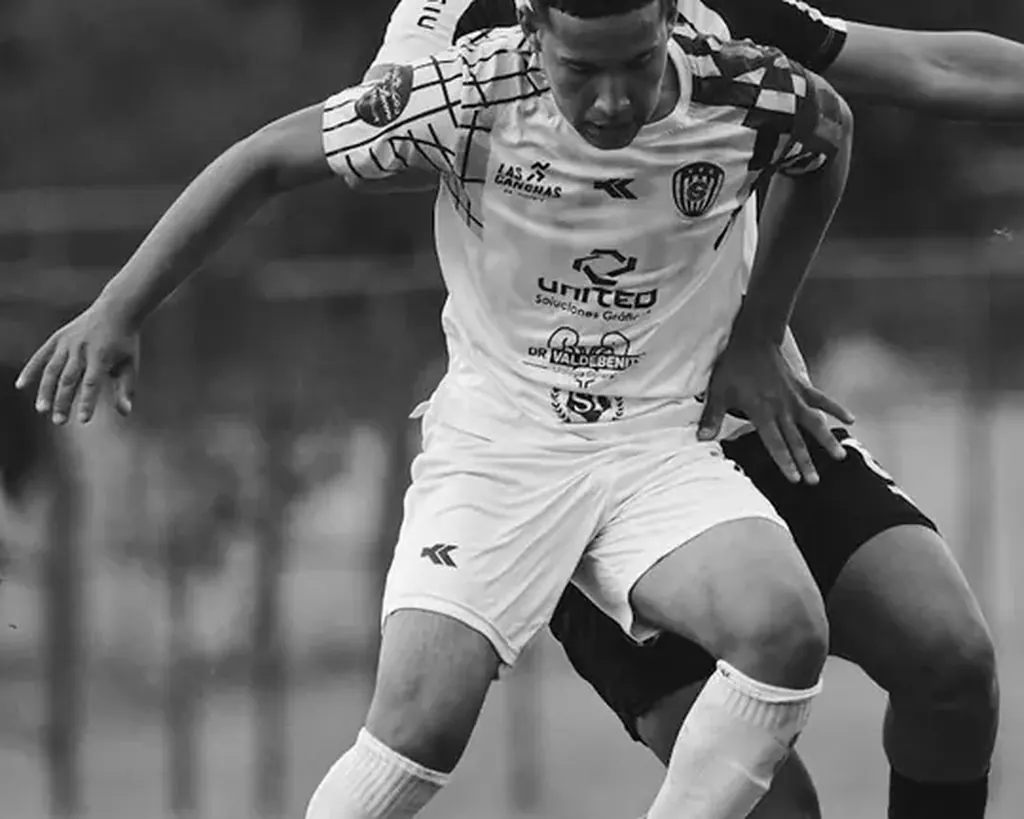
Pass Accuracy Under Pressure: Composure in Tight Spaces
In modern football, the ability to retain possession under duress separates functional sides from elite ones. For Liverpool, a team built on high-tempo transitions and aggressive pressing, pass accuracy under pressure is not merely a statistical curiosity—it is a tactical necessity. When opponents sit deep or apply intense counter-pressure at Anfield, the Reds’ capacity to find teammates in tight spaces determines whether attacks flourish or break down. This guide examines the key factors behind passing composure, offers practical steps for analysis, and highlights how Liverpool can maintain precision when the clock is ticking and defenders are closing in.
Understanding the Pressure Context
Pass accuracy under pressure differs fundamentally from simple completion rates. A midfielder who completes 90% of passes in open play may see that figure drop sharply when an opponent is within one meter. The metric captures not just technical skill but also decision-making speed, spatial awareness, and physical resilience. For Liverpool, whose system demands quick vertical passes into the final third, the margin for error is slim. A misplaced pass under pressure can lead to a dangerous counter-attack, especially against sides that transition rapidly.
Key Factors Influencing Accuracy
- Distance to nearest defender: The closer the opponent, the greater the risk of interception or rushed delivery.
- Body orientation: Players who receive the ball with their back to goal face higher difficulty in finding forward options.
- Pitch location: Central areas near the box see higher pressure density than wide zones.
- Game state: Leading late in a match often invites more conservative passing, while trailing can force riskier attempts.
Step 1: Identify High-Pressure Zones on the Pitch
Not all areas of the field demand equal composure. Liverpool’s tactical setup often funnels play through the half-spaces and central channels, where opponents concentrate their defensive block. To assess pass accuracy under pressure, start by mapping the zones where pressure is most intense.
- Use match footage or data visualizations to highlight areas within 20 meters of the opponent’s goal.
- Focus on the central third of the attacking half, where midfielders and forwards receive the ball with limited time.
- Note how Liverpool’s full-backs, when inverted, may face pressure from both wingers and central midfielders.
Step 2: Evaluate Player Roles and Responsibilities
Each position in Liverpool’s system carries distinct passing demands. A center-back under pressure from a lone striker has more time than a midfielder surrounded by three opponents. Break down the squad by role:
| Role | Typical Pressure Level | Key Passing Requirement |
|---|---|---|
| Goalkeeper | Low to medium (except when pressed high) | Quick distribution under closing forwards |
| Center-back | Medium (especially when building from back) | Composed short passes to midfield pivot |
| Full-back | High (when inverted or overlapped) | Accurate crosses or cutbacks with defender closing |
| Defensive midfielder | Very high (central congestion) | Quick one-touch passes to break lines |
| Attacking midfielder | Very high (box vicinity) | Threaded through balls under tight marking |
| Forward | High (back to goal, physical contact) | Hold-up play and layoffs to arriving runners |
For Liverpool, players like the defensive midfielder and full-backs often face the most sustained pressure. Their pass accuracy in tight spaces directly influences transition speed.
Step 3: Analyze Body Positioning and First Touch
A player’s ability to receive the ball under pressure starts before the pass arrives. The first touch determines whether the subsequent pass can be accurate or becomes a panicked clearance.
- Encourage scanning before the ball arrives—players who check their shoulder have higher success rates.
- Assess whether Liverpool’s midfielders use the inside of their foot to cushion passes or take aggressive touches into space.
- Note instances where a poor first touch forces a backward pass, reducing attacking momentum.
Step 4: Measure Distance and Direction of Passes Under Pressure
Not all passes under pressure are equal. A five-meter sideways pass to a nearby teammate carries lower risk than a 25-meter diagonal switch. To gauge true composure, categorize passes by distance and direction:
- Short passes (under 10 meters): Should maintain high accuracy even under pressure; failures indicate poor technique or decision-making.
- Medium passes (10–20 meters): Require more time and space; accuracy here reflects tactical awareness.
- Long passes (over 20 meters): Rarely attempted under heavy pressure unless in transition; success rates below 50% are common.
Step 5: Compare with League Averages and Historical Benchmarks
Contextualizing pass accuracy under pressure requires a baseline. Liverpool’s figures should be compared against Premier League averages for similar roles and match situations.
- The league average for pass accuracy under pressure in the attacking third hovers around 75–80% for top-six sides.
- Liverpool’s midfield typically achieves 82–86% in open play but may drop to 70–75% when pressed by a compact block.
- Historical data from the 2023–24 season shows that Liverpool’s pass accuracy under pressure in home matches was 4–6% higher than away, reflecting Anfield’s influence on opponent behavior.
Step 6: Identify Patterns in High-Pressure Situations
Recurring scenarios reveal strengths and weaknesses. Watch for:
- Build-up under a two-man press: How do Liverpool’s center-backs and goalkeeper cope when opponents commit two forwards?
- Half-space entries: When the ball reaches the right half-space, does the winger or full-back find a forward pass or recycle possession?
- Set pieces: Corners and free kicks often involve high-pressure passing to reset the play; accuracy here can prevent counter-attacks.
Step 7: Use Data to Inform Training Drills
Pass accuracy under pressure is trainable. Liverpool’s coaching staff can design drills that simulate match conditions:
- Small-sided games with reduced space and extra defenders.
- Possession exercises where players have two touches before passing.
- Pressure-trigger drills where a defender closes within one second of the receiver’s first touch.
Summary
Pass accuracy under pressure is a defining metric for Liverpool’s tactical identity. By identifying high-pressure zones, evaluating player roles, analyzing first touches, and comparing against benchmarks, fans and analysts can gauge the team’s composure in tight spaces. The Reds’ ability to maintain precision when opponents close ranks often dictates whether they break down stubborn defenses or fall into predictable patterns. Regular monitoring through tools like stats-metrics provides actionable insights for both supporters and coaching staff. In a league where margins are measured in centimeters and split seconds, composure under pressure remains the quiet engine of attacking football.
Reader Comments (0)